
Introduction
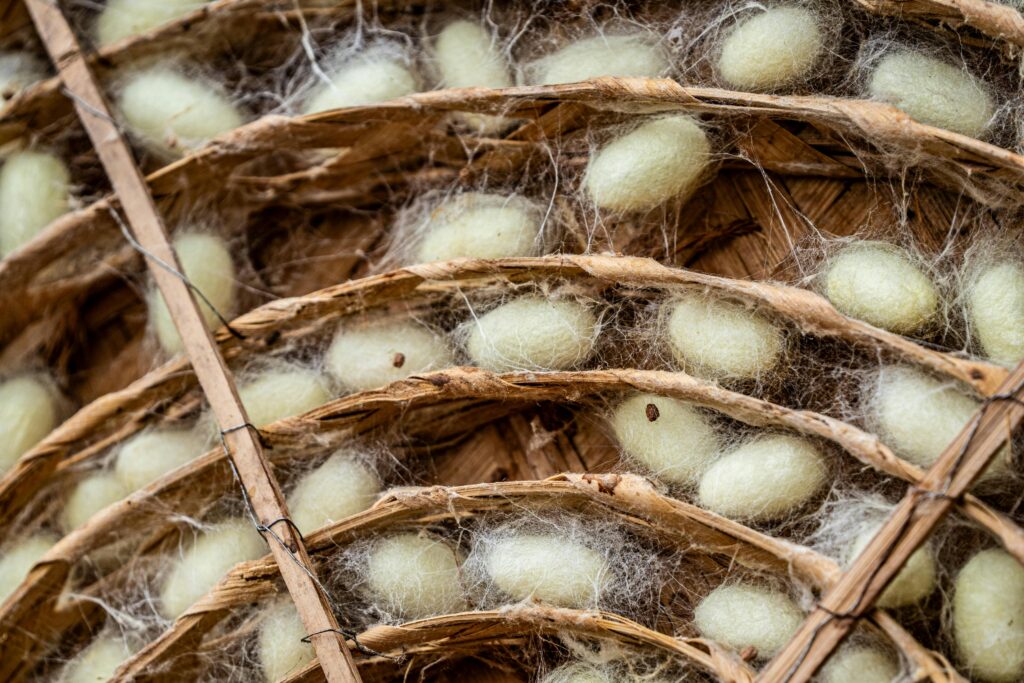
Cocoon yield plays a crucial role in determining the success and profitability of sericulture. Higher cocoon production means better silk quality and increased income for farmers. However, many farmers struggle with low yield due to improper practices.
In this blog, we reveal the top 10 secrets to increase cocoon yield in sericulture using practical and proven methods.
1. Choose High-Quality Silkworm Seeds to increase cocoon yield
Always select disease-free layings (DFLs) from reliable sources.
Why it matters:
- Ensures healthy silkworm growth
- Reduces mortality rate
- Improves cocoon quality
2. Mulberry Leaf Quality for Better Cocoon Yield in Sericulture
Mulberry leaves are the only food for silkworms.
Tips:
- Feed fresh, tender leaves
- Avoid dry or infected leaves
- Harvest at the right stage
Healthy leaves directly improve cocoon size and weight
3. 🌡️ Ideal Temperature and Humidity for Cocoon Yield in Sericulture
Silkworms are highly sensitive to environmental conditions.
Ideal conditions:
- Temperature: 24°C to 28°C
- Humidity: 70% to 85%
Maintaining proper conditions ensures better growth and cocoon formation.
4. Maintain Clean Rearing Environment
Hygiene is one of the most important factors in sericulture.
Best practices:
- Clean rearing trays regularly
- Disinfect room before each batch
- Remove leftover leaves and waste
This helps prevent diseases and improves yield.
5. Follow Proper Feeding Schedule
Feeding at the right time and quantity is essential.
Feeding tips:
- Feed 3–4 times daily
- Increase quantity as worms grow
- Maintain consistent feeding intervals
Proper feeding leads to healthy and uniform cocoon production.
6. Prevent Diseases Early
Silkworm diseases can drastically reduce cocoon yield.
Prevention methods:
- Use disinfectants like bleaching powder
- Maintain hygiene
- Avoid overcrowding
Early prevention saves your entire crop.
7. Avoid Overcrowding of Silkworms
Too many silkworms in one tray can lead to stress and disease.
Solution:
- Maintain proper spacing
- Expand rearing space as worms grow
This ensures better growth and higher cocoon yield.
8. Provide Proper Mounting for Cocooning
Mounting is the stage where silkworms spin cocoons.
Tips:
- Use quality mountages
- Provide enough space
- Ensure proper ventilation
Good mounting results in uniform and high-quality cocoons.
9. Use Balanced Nutrition for Mulberry Plants
Healthy plants produce better leaves.
Fertilizer tips:
- Apply organic manure regularly
- Use NPK fertilizers
- Maintain soil fertility
Better leaves = better cocoons.
10. Adopt Modern Sericulture Techniques to increase cocoon yield
Using improved methods can significantly boost yield.
Techniques:
- Shoot rearing method
- Use of improved tools
- Scientific farming practices
Modern methods increase efficiency and production.
Conclusion
Increasing cocoon yield in sericulture requires proper planning, care, and scientific practices. By following these 10 secrets—such as using quality seeds, maintaining hygiene, proper feeding, and adopting modern techniques—you can significantly improve your cocoon production and income.
Start implementing these tips today to achieve better results in your sericulture farming.